Nonprofit Email Marketing: A Simple Guide for 2026
Learn nonprofit email marketing basics: build your list, write emails donors open, and send updates without the complexity. Step-by-step guide.


TL;DR: Nonprofit email marketing doesn't require fancy automation or a marketing degree. Start by collecting emails with a clear value proposition, segment your list by donor type and interest, write emails that tell stories (not sales pitches), and send consistently—monthly is fine for most organizations. Focus on building relationships, not running campaigns. The right tool makes this easier, but the fundamentals matter more than the features.
Email remains one of the most effective ways for nonprofits to connect with donors, volunteers, and supporters. Unlike social media, where algorithms decide who sees your posts, email lands directly in your community's inbox. You control the message, the timing, and the relationship.
Disclosure: We're the team behind Groupmail—simple email software for organizations since 1996. We'll be upfront about where we fit and honest about what actually matters for your nonprofit's success.
Why Email Marketing Matters for Nonprofits
Your nonprofit has a mission that matters. But between grant applications, program delivery, and board meetings, staying connected with supporters often falls to the bottom of the list. That's a problem—because the organizations that communicate consistently are the ones that retain donors.
Consider this: email generates an average of $36 for every $1 spent in the nonprofit sector. More importantly, regular communication keeps your organization top-of-mind when supporters are deciding where to direct their giving. A donor who hasn't heard from you in six months is a donor who's forgotten why they gave in the first place.
Email isn't about marketing in the traditional sense. For nonprofits, it's about stewardship—keeping your community informed, engaged, and connected to your impact.
💡 Tip: You don't need to email weekly. For most nonprofits, a monthly update is enough to stay connected without overwhelming your list or your staff.
Before You Start: What You'll Need
Getting started with nonprofit email marketing doesn't require a marketing team or technical expertise. Here's what you actually need:
An email list (even a small one). If you have a spreadsheet of donors, volunteers, or past event attendees, you have a list. Quality matters more than quantity—100 engaged supporters are worth more than 1,000 cold contacts.
Permission to email. This isn't just polite; it's legally required under laws like GDPR in Europe and CAN-SPAM in the US.
A simple email tool. You need something that lets you design emails without coding, manage your contacts, and see who opened your messages. Groupmail is built specifically for organizations like yours—set up in 10 minutes, no marketing expertise required. Other options exist, but avoid anything that requires a certification course to use. For more guidance on selecting nonprofit software, TechSoup offers free resources for organizations evaluating technology options.
Something worth saying. Before you worry about tools and tactics, make sure you have content your community actually wants to read. Impact stories, program updates, volunteer spotlights, and upcoming events all work well.
Step 1: Build Your List the Right Way
The foundation of nonprofit email marketing is a healthy list. Here's how to build one ethically and effectively:
Add a signup form to your website. Place it prominently—not buried in your footer. Explain what subscribers will receive: "Get monthly updates on our work and stories from the families we serve."
Collect emails at events. Whether it's a gala, volunteer day, or community meeting, have a simple way for attendees to join your list. A tablet with a signup form works better than a paper sheet you'll forget to enter later.
Ask during the donation process. When someone gives, they're at peak engagement. Include an email opt-in checkbox (checked by default is fine in most regions, but check your local laws).
Import existing contacts carefully. If you have old spreadsheets of supporters, don't just dump them into your email tool. Reach out first with a re-engagement message asking if they'd like to stay connected.
Key Takeaway: A smaller, engaged list outperforms a large, disinterested one. Focus on people who actually want to hear from you.
Step 2: Segment Your List for Relevance
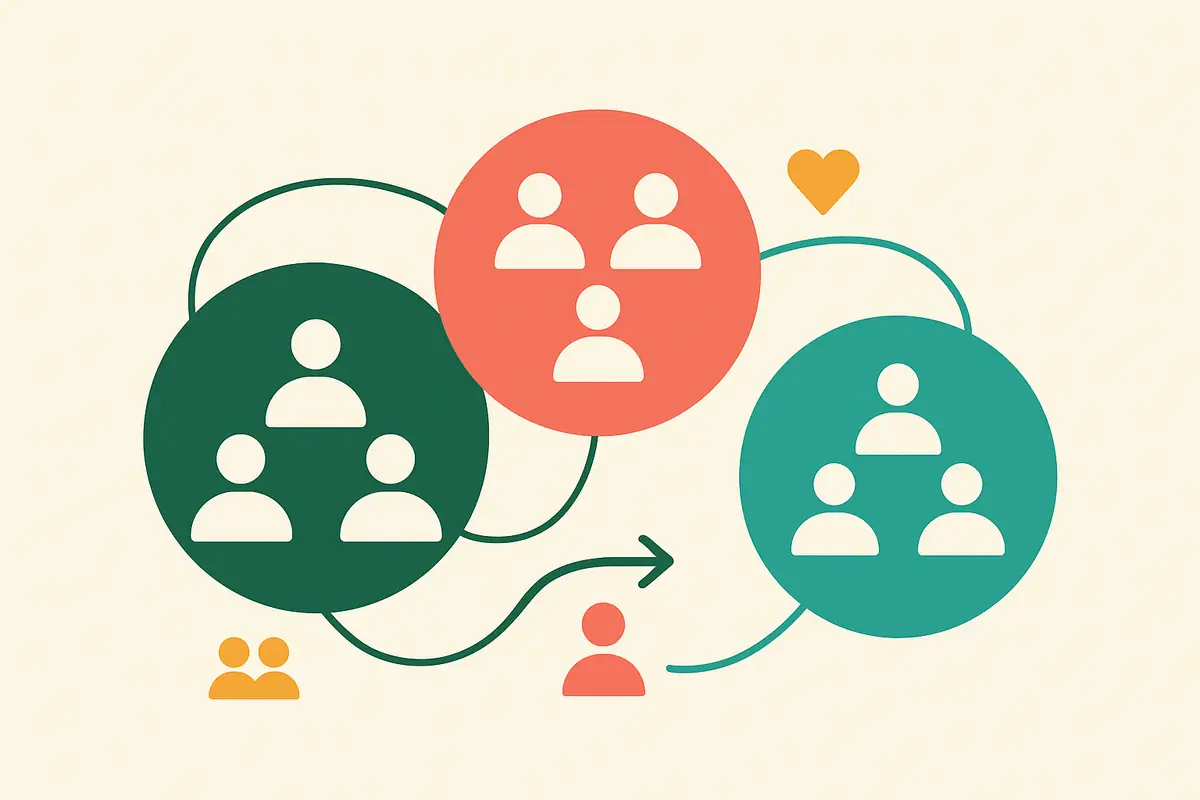
Not everyone on your list cares about the same things. A major donor has different interests than a first-time volunteer. Segmentation lets you send the right message to the right people.
Start with these basic segments:
By relationship type: Donors, volunteers, event attendees, newsletter subscribers. Someone who gives money wants to know their impact. Someone who gives time wants to know when you need help next.
By giving history: First-time donors need different communication than loyal supporters who've given for five years. Major donors deserve more personal attention.
By interest area: If your nonprofit runs multiple programs, let people indicate which ones they care about. A food bank supporter might be passionate about child hunger but less interested in senior programs (or vice versa).
By engagement level: Some people open every email. Others haven't clicked in months. You might want to send different messages—or different frequencies—to each group.
Step 3: Write Emails People Actually Open
Your supporters are busy. They receive dozens of emails daily. Here's how to stand out:
Subject lines matter enormously. Keep them short (under 50 characters), specific, and human. "March Update" is forgettable. "Maria found housing—thanks to you" creates curiosity and connection.
Lead with impact, not asks. Your donors gave because they believe in your mission. Show them their investment is working before you ask for more.
Tell one story at a time. The most effective nonprofit emails focus on a single person, program, or outcome. Abstract statistics about "thousands served" don't connect like "Meet James, who..."
Keep it short. Aim for 200-300 words for regular updates. Save longer content for annual reports or special appeals. Most people skim email on their phones—write accordingly.
Include one clear call to action. Every email should have one thing you want readers to do: read a story, donate, sign up for an event, share on social media. Multiple asks dilute all of them.
Step 4: Design for Simplicity
You don't need fancy graphics or elaborate templates. In fact, simpler emails often perform better—they feel more personal and load faster on mobile devices.
Use your logo and brand colors. Consistency builds recognition. But one header image is enough.
Make text readable. Short paragraphs, adequate spacing, readable font size (at least 14px for body text). If it's hard to read on a phone, you'll lose people.
Test on mobile first. More than half your supporters will read your email on their phone. Send yourself a test and check how it looks on your own device before hitting send.
Include contact information. A physical address is legally required in most regions. But also include a way for supporters to reach you—some will reply to your emails, and that's a good thing.
Simple Email for Nonprofits
Send updates to your donors and volunteers without the marketing complexity.
Set up in 10 minutes. No credit card required.
Trusted since 1996 · Human support · 30% nonprofit discount
Step 5: Send Consistently (Not Constantly)
The biggest mistake nonprofits make isn't sending too much—it's sending inconsistently. Supporters forget about you when you go silent for months, then feel overwhelmed when you suddenly appear with an urgent appeal.
Pick a frequency you can maintain. Monthly is realistic for most small nonprofits. Bi-weekly works if you have more capacity. Weekly is only sustainable if you have dedicated communications staff.
Stick to your schedule. It's better to send a brief update on time than a perfect newsletter two weeks late. Consistency builds trust and habit.
Plan around your calendar. Map out your year: when are your campaigns, events, and natural communication moments? Build your email schedule around these touchpoints.
Respect special times. During year-end giving season, you can email more frequently—nearly 30% of annual giving happens in December, with 12% occurring in the last three days of the year. During summer months, you might scale back. Match your cadence to your supporters' expectations.
Common Mistakes to Avoid
Buying email lists. Never do this. Purchased lists have terrible engagement, damage your sender reputation, and likely violate privacy laws. Build your list organically.
Sending without permission. Just because someone gave you their business card doesn't mean they want your newsletter. Always get explicit consent.
Ignoring unsubscribes. When someone unsubscribes, they're doing you a favor—they're telling you they're not engaged rather than marking you as spam. Make unsubscribing easy and honor requests immediately.
Treating every email as a fundraising ask. If you only email when you want money, people will stop opening your messages. The ratio should be roughly 3:1—three value-giving emails for every ask.
Neglecting your welcome email. When someone joins your list, send an immediate welcome message. This email gets the highest open rates of any you'll send. Use it to set expectations and share your story.
⚠️ Watch out: Many email tools count unsubscribed contacts against your plan limits. Check the fine print—you might be paying for people who can't receive your emails.
Nonprofit Email Marketing Checklist
Before you hit send on your next email, run through this list:
- Subject line is under 50 characters and compelling
- Content focuses on one main topic or story
- There's a clear call to action
- The email looks good on mobile
- Links work correctly
- You've sent a test to yourself
- You're sending to the right segment
- You've scheduled it for a reasonable time (Tuesday-Thursday, mid-morning often works well)
- Unsubscribe link is present and working
- Your organization's physical address is included
Conclusion
Nonprofit email marketing isn't about sophisticated automation or growth hacking. It's about staying connected with the people who believe in your mission. Start simple: collect emails from people who want to hear from you, tell stories about your impact, and show up consistently in their inboxes.
The tools matter less than the fundamentals. But the right tool makes the fundamentals easier to execute—especially when you're juggling a dozen other priorities.
Ready to send your first update? Try Groupmail free – set up in 10 minutes, no credit card required. Built for organizations, not marketers.