Constant Contact Removed Its Free Plan: 6 Better Alternatives for Nonprofits (2026)
Constant Contact killed its free plan. Compare 6 nonprofit-friendly alternatives with free tiers, simpler tools, and better pricing for 2026.

Last updated: April 13, 2026
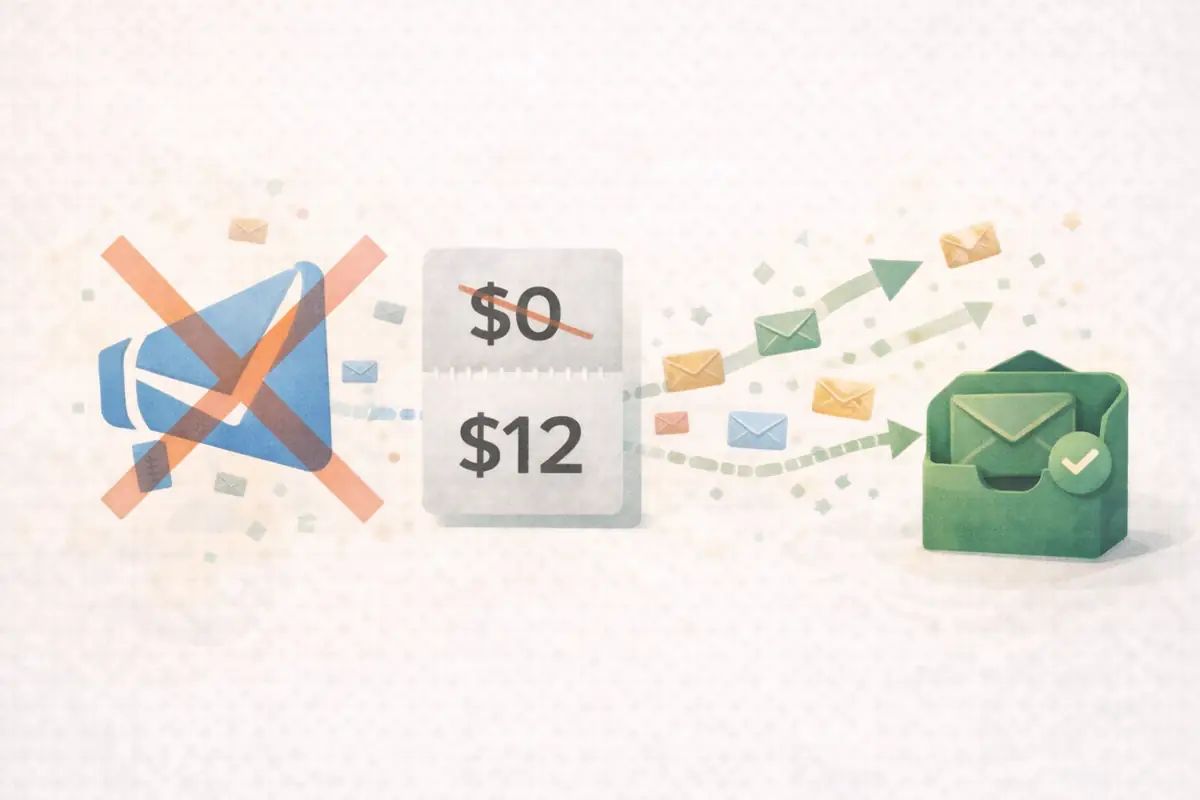
TL;DR: Constant Contact eliminated its free plan entirely — the cheapest option is now $12/month for 500 contacts. For nonprofits that need simple member updates without marketing complexity, Groupmail offers the best balance: a free plan for 500 contacts, unlimited contacts on paid plans starting at $15/month, and human support on every tier. EmailOctopus has the most generous free tier (2,500 contacts), and MailerLite offers solid automation on a budget. But for organizations that value simplicity and real people answering the phone, Groupmail is the clear starting point. Try Groupmail free — set up in 10 minutes →
If you're a nonprofit that relied on Constant Contact's free tier, you've likely discovered it no longer exists. Constant Contact restructured its pricing and replaced the free plan with a 14-day trial — barely enough time to import your contacts, let alone evaluate whether the tool fits your organization.
Disclosure: We're the team behind Groupmail — simple email software for organizations since 1996. We'll be upfront about where we fit and honest about alternatives.
Why Does Losing a Free Plan Hit Nonprofits So Hard?
Small organizations depend on free tiers to communicate with members before they have budget to commit — and Constant Contact just cut that lifeline.
The elimination of the free plan means every nonprofit, regardless of size, now faces a monthly bill before sending a single email. Constant Contact's Lite plan starts at $12/month for 500 contacts — that's $144/year before any discount kicks in. For a volunteer-run charity, church outreach committee, or PTA, that's money that could go directly toward the mission.
The problem runs deeper than pricing. Nonprofit Tech for Good reports that 86% of nonprofits use email marketing, and Neon One found that 48% of donors prefer receiving updates via email — more than double the next closest channel. Cutting off free access to email tools doesn't just inconvenience nonprofits; it disconnects them from their supporters.
Even more frustrating is how Constant Contact counts contacts. You're charged for your total contact count — including people who've unsubscribed but haven't been manually deleted. M+R Benchmarks found that 9% of nonprofit subscribers unsubscribed in 2024. A 5,000-contact list accumulates roughly 450 inactive contacts per year that you're still paying for.
💡 Tip: Before switching email tools, export your contact list as a CSV file from your current platform. Most tools make this easy — look for an "Export" option in your audience or contacts settings.
What Should You Look for in Nonprofit Email Software?
The best tool is one any volunteer can pick up in 10 minutes — with a real free plan, transparent pricing, and humans who answer when something breaks.
Not every email tool is built with organizations in mind. When evaluating alternatives to Constant Contact, prioritize these factors:
Actual free plans, not trials. A 14-day trial isn't enough. Look for platforms offering genuinely free tiers with at least 500 contacts so you can grow before committing money. According to Neon One, the average small nonprofit maintains an email list of 547 contacts — so a 250-contact limit (Mailchimp) won't cut it.
Transparent contact counting. Some platforms charge for unsubscribed contacts. Others count only active members. The difference can significantly affect your monthly cost, especially since only 35% of nonprofits regularly remove unengaged subscribers, according to Nonprofit Tech for Good.
Simplicity over features. Nonprofits sending member updates don't need marketing automation, A/B testing, or behavioral triggers. They need a simple editor, reliable delivery, and basic reporting.
Human support. When something goes wrong — and eventually it will — you want to reach a person, not a chatbot.
What Are the 6 Best Alternatives After Constant Contact Removed Its Free Plan?
Groupmail leads for simplicity and human support, MailerLite for automation on a budget, and EmailOctopus for the largest free tier — all outperform Constant Contact on nonprofit value.
| Tool | Best For | Free Plan | Starting Price | Contacts (Paid) | Charges Unsubscribes? |
|---|---|---|---|---|---|
| Groupmail | Simplicity + human support | 500 contacts | $15/mo | Unlimited | No |
| MailerLite | Automation on a budget | 500 contacts | $10/mo | 500+ | No |
| EmailOctopus | Largest free tier | 2,500 contacts | $9/mo | Varies | No |
| Mailchimp | Brand familiarity | 250 contacts | $13/mo | 500+ | Yes |
| Brevo | High email volume | 300 emails/day | $9/mo | 500 (Starter) | No |
| Buttondown | Plain-text simplicity | 100 contacts | $9/mo | Varies | No |
1. Groupmail
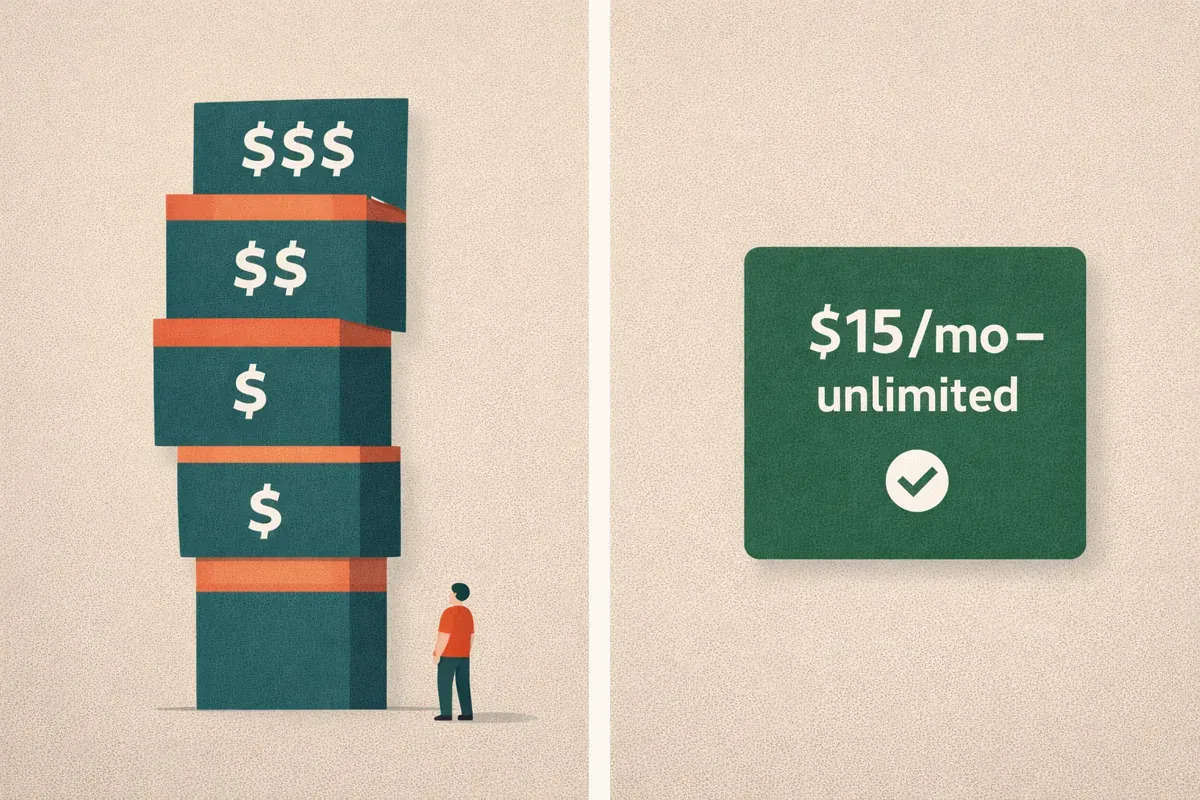
Best for: Organizations wanting simplicity and human support Pricing: Free (500 contacts) | Community $15/mo | Continuity $29/mo | Business $49/mo | All paid plans: unlimited contacts Website: groupmail.io
Groupmail takes a fundamentally different approach to email. While Constant Contact has grown increasingly complex with marketing automation, social ad management, and CRM features, Groupmail focuses exclusively on what organizations actually need: sending updates to their members. Setup takes about 10 minutes. There's no DNS configuration, no technical prerequisites, no mandatory training videos. You sign up, import your contacts, create an email using the straightforward editor, and send.
The platform has been around since 1996 — nearly 30 years of helping nonprofits, churches, schools, and associations communicate with their communities. That longevity matters. According to the 2025 Online Donor Feedback Survey, 33% of donors say email is the channel that most inspires them to give — so reliability isn't optional. Groupmail manages email delivery on all plans, meaning zero technical setup for your team.
Community-First pricing means $15/month IS the community org price — no application forms, no discount codes, no hoops. All paid plans include unlimited contacts, so you'll never pay for members who unsubscribed. Credit top-ups ($5 per 1,000 extra emails) are available on every plan, including Free. The Continuity plan ($29/month) includes a handover call — when your volunteer leaves, Groupmail's team walks the new person through the account. No other major email platform offers this kind of transition support. The $15/month Community plan stays well under typical $500 board-approval thresholds, making budget discussions easier.
Pricing last verified April 2026. Visit groupmail.io/pricing for current rates.
What's missing: Groupmail doesn't offer marketing automation, complex A/B testing, or a large integration library. That's by design — these are trade-offs for simplicity, not weaknesses. If your nonprofit needs multi-step automated workflows, MailerLite may be a better fit.
Key Takeaway: Groupmail is purpose-built for organizations that want to send member updates without becoming email marketing experts. The nearly 30-year track record, human support on every plan, and one-click cancellation provide peace of mind that newer tools can't match.
2. MailerLite
Best for: Organizations wanting automation features on a budget Pricing: Free (500 contacts, 12,000 emails/mo) | Growing Business from $10/mo Website: MailerLite
MailerLite offers a solid free plan for up to 500 contacts with 12,000 monthly emails. The interface is clean, modern, and relatively easy to navigate. Where MailerLite differs from Groupmail is in its broader feature set — you get landing pages, websites, pop-up forms, and more sophisticated automation. For larger nonprofits with dedicated communications staff, these extras can be valuable. According to MailerLite's own benchmarks, nonprofits using their platform see an average open rate of 52.38% — well above the industry average.
One concern: MailerLite has been gradually reducing its free tier limits, cutting the free plan from 1,000 to 500 contacts in late 2025. There's no guarantee further reductions won't follow. For a deeper look at what changed, see our article on MailerLite's free plan cut.
MailerLite's nonprofit discount is 30%, but it can't stack with annual billing — nonprofits must choose one or the other. You also need to contact support within a 14-day trial with your 501(c)(3) documentation. Compare that to Groupmail's approach, where $15/month is the default price — no application, no documentation, no stacking limitations.
What's missing: MailerLite is built for general small business use, not specifically for community organizations. Some features and terminology lean marketing-oriented, which can feel unfamiliar to a church secretary or PTA volunteer. The free plan includes MailerLite branding on every email, and support is limited after the first 14 days.
3. EmailOctopus
Best for: Budget-conscious organizations needing a generous free tier Pricing: Free (2,500 contacts, 10,000 emails/mo) | Pro from $9/mo Website: EmailOctopus
If your primary constraint is cost and you have a larger contact list, EmailOctopus deserves serious consideration. Their free plan supports up to 2,500 contacts with 10,000 monthly emails — the most generous free tier among major email platforms. The platform focuses purely on email, avoiding the feature bloat that makes tools like Constant Contact overwhelming. You get a drag-and-drop editor, basic automation, signup forms, and clean reporting.
EmailOctopus offers a 20% lifetime discount for nonprofits — slightly lower than some alternatives, but the generous free tier often makes this irrelevant for smaller organizations. The Pro plan starts at just $9/month, making it one of the most affordable options when you do need to upgrade. According to Neon One, the average nonprofit raises $1.11 per email contact per campaign — so getting started for free means more of that revenue goes directly to your mission.
What's missing: EmailOctopus is relatively newer and less established than tools like Groupmail or Constant Contact. The free plan includes EmailOctopus branding on every email, and automation capabilities are limited compared to MailerLite. For organizations that value decades of stability and human support, this might be a consideration.
Simple Email for Organizations
Send updates to your members without the marketing complexity.
Set up in 10 minutes. No credit card required.
Trusted since 1996 · Human support · Unlimited contacts from $15/mo
4. Mailchimp
Best for: Organizations already familiar with the platform Pricing: Free (250 contacts, 500 emails/mo) | Essentials from $13/mo | 15% nonprofit discount Website: Mailchimp
Mailchimp remains the most recognized name in email, but recognition doesn't equal recommendation. Their free plan now supports just 250 contacts with 500 monthly emails — down from 2,000 contacts just a few years ago. That's barely enough for a small book club, let alone a functioning nonprofit. For more on what changed, see our breakdown of Mailchimp's free plan changes in 2026.
Mailchimp's 15% nonprofit discount is the lowest among major competitors. It requires a 501(c)(3) determination letter and must be requested before purchasing a paid plan — no retroactive application. Critically, Mailchimp counts all contacts toward your bill — including unsubscribed contacts still in your system. M+R Benchmarks 2025 found nonprofits average a 9% unsubscribe rate. A 5,000-contact list accumulates roughly 450 zombie contacts per year you're still paying for. On Trustpilot, Mailchimp holds a 2.8/5 rating from over 1,300 reviews — with pricing and complexity as recurring complaints.
What's missing: Mailchimp has evolved into a full marketing platform — with the complexity and pricing to match. The interface now includes CRM features, social ad management, and behavioral triggers that most nonprofits will never use. For organizations evaluating options fresh, better alternatives exist at lower prices with simpler interfaces.
5. Brevo
Best for: Larger organizations with high email volume needs Pricing: Free (300 emails/day, unlimited contacts) | Starter from $9/mo | 15% nonprofit discount (Enterprise only) Website: Brevo
Formerly known as Sendinblue, Brevo takes a unique approach to pricing: instead of charging by contact count, they charge by email volume. The free plan allows 300 emails per day (roughly 9,000 per month) with unlimited contacts. For organizations with large contact lists who send infrequently — say, a monthly newsletter to 10,000 donors — this model can work well. According to M+R Benchmarks, nonprofits sent an average of 62 email messages per subscriber in 2024 — so high-volume senders need to plan carefully.
However, Brevo's paid Starter plan caps contacts at just 500 — meaning upgrading from the free plan can actually reduce your contact allowance unless you jump to a higher tier. A nonprofit with 3,000 members wanting reliable monthly emails would need roughly the $49/month tier just to store all their contacts. Brevo's nonprofit discount is just 15%, and according to Brevo's pricing plans, it's only available on custom Enterprise plans — so most small nonprofits won't qualify.
What's missing: Brevo includes SMS messaging, CRM tools, and transactional email capabilities that most organizations don't need. The feature density can feel overwhelming for a volunteer just trying to send a weekly update. And the contact-cap quirk on paid plans means pricing isn't as straightforward as it first appears. Groupmail offers unlimited contacts on every paid plan — no surprises, no auto-upgrades.
6. Buttondown
Best for: Very small organizations wanting plain-text simplicity Pricing: Free (100 contacts) | Basic from $9/mo | 50% nonprofit discount Website: Buttondown
Buttondown is the minimalist's choice — a stripped-back email tool that focuses on writing over design. The 50% nonprofit discount is the most generous percentage among major platforms, and the interface has a deliberately lo-fi, writer-friendly feel. For organizations that send plain-text updates to a small supporter list, Buttondown can be refreshingly simple.
That said, the free plan caps at just 100 contacts — far below what most nonprofits need. And while the 50% discountsounds generous, add-ons escalate quickly — $9 to $79 per month each for tagging, analytics, and automations. A nonprofit adding just two features could see their bill rival Constant Contact's. The platform lacks visual email templates, which makes it harder to create polished newsletters that match your brand. Nonprofit emails with personalized, well-designed content see 26% higher open rates, according to Campaign Monitor.
What's missing: Buttondown is designed for individual creators and writers, not community organizations managing member lists. There's no phone support, no migration assistance, and limited list management. For most nonprofits, Buttondown may be too minimal. Groupmail's $15/month includes everything most community organizations need — no add-on maze.
Which Tool Is Right for Your Organization?
Groupmail is the default recommendation for nonprofits wanting simple member updates — choose MailerLite for automation, EmailOctopus for the largest free tier, and avoid Mailchimp unless you're already deeply invested.
The best choice depends on your organization's specific situation:
Choose Groupmail if you want the simplest possible experience with human support. Ideal for church secretaries, PTA volunteers, association admins, and nonprofit staff who need to send member updates without learning marketing software. Groupmail manages email delivery on all plans — no technical setup required. The handover call (Continuity tier) solves a problem no other platform even acknowledges: what happens when the volunteer running your email leaves.
Choose MailerLite if you need automation capabilities — welcome sequences, scheduled sends, landing pages — and want a clean interface. Best for organizations with dedicated communications staff who can handle more complexity.
Choose EmailOctopus if you have a larger contact list and budget is your primary constraint. The 2,500-contact free tier is unmatched.
Choose Brevo if you have a large contact list but send emails infrequently. Their volume-based pricing model rewards this pattern — just watch the contact caps on paid plans.
Reconsider Mailchimp if you're evaluating options fresh. The reduced free tier, contact-counting practices, and 15% nonprofit discount make it hard to recommend over alternatives. For a full comparison, see our guide to Mailchimp alternatives for nonprofits.
For a broader look at the nonprofit email landscape, see our full guide to email software for nonprofits and our Constant Contact alternatives comparison.
FAQ
Does Constant Contact still have a free plan? No. Constant Contact eliminated its free plan entirely. The only free option is a 14-day trial, which requires a credit card. After the trial, the cheapest plan (Lite) starts at $12/month for 500 contacts. For organizations needing a permanent free tier, Groupmail, MailerLite, and EmailOctopus all offer genuine free plans.
Does Constant Contact offer a nonprofit discount? Yes — 20% off with a 6-month prepayment, or 30% off with a 12-month prepayment. However, the discount requires upfront commitment before you've confirmed the platform fits. Constant Contact's cancellation process also requires a phone call during business hours (Mon–Fri 8am–8pm ET). Users on Sitejabber rate Constant Contact 1.3/5 stars, with billing disputes and difficult cancellations as recurring complaints.
Will my contacts transfer to a new platform? Yes. Export your contact list from Constant Contact as a CSV file (Contacts → Manage Lists → Export), then import it to your new platform. Most tools accept CSV imports. Groupmail's Continuity plan ($29/month) includes migration assistance — the team helps you make the switch.
Why is Groupmail so affordable for nonprofits? Groupmail uses Community-First pricing — $15/month is the default price for all community organizations. There are no discount codes, no application forms, and no documentation required. This works because Groupmail is built specifically for organizations sending member updates, not for enterprise marketing teams. The feature set stays focused, which keeps costs down for everyone. Credit top-ups ($5 per 1,000 emails) are available on all plans, including Free.
Does Mailchimp charge for unsubscribed contacts? Yes. Mailchimp counts all contacts — subscribed, unsubscribed, and non-subscribed — toward your plan limits. This means you're paying for people who can no longer receive your emails unless you manually remove them. Groupmail counts only active contacts and includes unlimited contacts on every paid plan.
What happens when the volunteer managing our email changes? This is a common challenge for nonprofits, churches, and PTAs. Most platforms offer no support for transitions. Groupmail's Continuity plan ($29/month) includes an annual handover call — when a volunteer leaves, Groupmail's team walks the new person through the account. No other major email platform offers this kind of transition support.
Is it hard to switch from Constant Contact? Not at all. The process is straightforward: export your contacts as CSV from Constant Contact, sign up for your new tool, and import the file. Most organizations complete the switch in under an hour. Groupmail's Continuity plan includes migration assistance if you want help. For step-by-step instructions from a similar migration, see our guide to switching from Mailchimp.
Conclusion
Constant Contact's decision to eliminate their free plan pushed many nonprofits to reevaluate their email tools — and that's not necessarily a bad thing. The alternatives available today often offer better value, simpler interfaces, and more generous nonprofit support than what Constant Contact provides at $12/month minimum.
For most organizations, the question isn't about finding the most feature-rich platform. It's about finding one that lets you communicate with your members without becoming an email marketing expert. That's exactly what Groupmail is designed for.
Ready to send your first update? Start free with Groupmail — set up in 10 minutes, no credit card required. Built for organizations, not marketers.