Mailchimp Nonprofit Pricing 2026: What You'll Really Pay
Mailchimp's 15% nonprofit discount hides extra costs. See real pricing for 500-10,000 contacts and discover better alternatives with 30% off.

Last updated: March 2026
Mailchimp's nonprofit discount is 15% off paid plans. After the discount, nonprofits pay $38–$51/month for 2,500 contacts — and Mailchimp charges for unsubscribed contacts too.
TL;DR: Mailchimp offers nonprofits a 15% discount, but the real cost is higher than it appears. You'll pay for unsubscribed contacts, face monthly sending limits, and see prices climb quickly as your list grows. For a nonprofit with 2,500 contacts, expect to pay $38–$51/month after the discount. Simpler alternatives like Groupmail offer Community-First pricing starting at $15/mo and don't charge for inactive contacts See Groupmail pricing →—making them a better fit for organizations focused on member updates rather than marketing automation.
If you're a nonprofit evaluating Mailchimp, you've probably seen the "15% nonprofit discount" prominently displayed. It sounds generous. But once you dig into the pricing tiers, contact counting rules, and hidden fees, the actual cost becomes harder to predict. This guide breaks down exactly what nonprofits pay at different list sizes and highlights where Mailchimp's pricing model can trip you up.
Disclosure: We're the team behind Groupmail—simple email software for organizations since 1996. We'll be upfront about where we fit and honest about how Mailchimp's pricing actually works.
How Mailchimp's Nonprofit Discount Works
Mailchimp provides verified nonprofits and charities with a 15% discount on paid plans. To qualify, you'll need to create a free account first, then contact their billing team with documentation. US-based organizations must provide a 501(c)(3) determination letter; international nonprofits need equivalent official documentation.
The discount applies to all paid marketing plans (Essentials, Standard, and Premium) but doesn't extend to add-ons, transactional email, or third-party purchases made through your account. You also can't combine the nonprofit discount with other promotional offers.
One important detail: you must request the discount before purchasing a paid plan. Mailchimp doesn't offer retroactive discounts or refunds for past purchases.
💡 Tip: Before evaluating any email tool, tally your actual contact list size—including people who've unsubscribed but are still in your database. Mailchimp counts all of them toward your bill.
Mailchimp's 2026 Pricing Tiers Explained
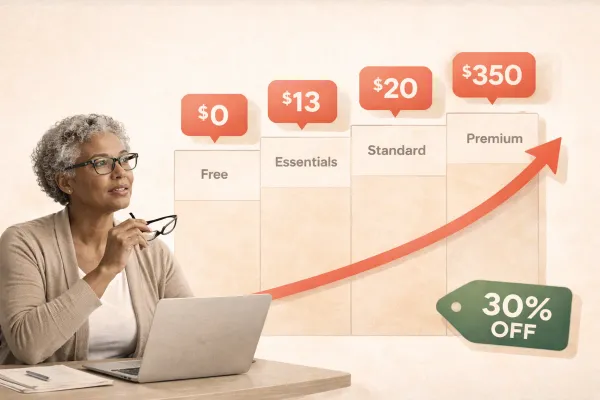
Mailchimp offers four marketing plans. Here's what each costs before and after the nonprofit discount:
Free Plan
The free tier supports up to 500 contacts and 1,000 emails per month (with a daily cap of 500). No nonprofit discount applies because there's nothing to discount. However, the free plan comes with significant limitations: no email scheduling, no multi-step automations, Mailchimp branding on every email, and support only for the first 30 days.
Essentials Plan
Starting at $13/month for 500 contacts, this is Mailchimp's entry-level paid option. Pricing scales with your contact count:
| Contacts | Regular Price | With 15% Nonprofit Discount |
|---|---|---|
| 500 | $13/month | $11.05/month |
| 1,500 | $27/month | $22.95/month |
| 2,500 | $45/month | $38.25/month |
| 5,000 | $75/month | $63.75/month |
| 10,000 | $110/month | $93.50/month |
The Essentials plan includes 24/7 email and chat support, A/B testing, and access to all templates. Your monthly send limit is 10 times your contact count. However, you're limited to 3 audiences (lists) and can't access multi-step automations or dynamic content.
Standard Plan
Starting at $20/month for 500 contacts, the Standard plan adds multi-step automations, send-time optimization, and dynamic content. Pricing climbs faster:
| Contacts | Regular Price | With 15% Nonprofit Discount |
|---|---|---|
| 500 | $20/month | $17/month |
| 2,500 | $60/month | $51/month |
| 5,000 | $100/month | $85/month |
| 10,000 | $135/month | $114.75/month |
Your monthly send limit is 12 times your contact count. This plan supports up to 100,000 contacts and includes more advanced segmentation features.
Premium Plan
Starting at $350/month for 10,000 contacts, Premium is designed for large organizations with complex needs. With the nonprofit discount, that drops to $297.50/month. Most nonprofits won't need this tier—it's built for marketing teams running sophisticated multi-channel campaigns.
Key Takeaway: For a nonprofit with 2,500 contacts needing basic automations, Mailchimp's Standard plan costs $51/month after the discount—or $612/year. That's higher than many alternatives offering 30% nonprofit discounts.
The Hidden Costs Most Nonprofits Miss
Mailchimp's pricing page shows base rates, but several factors can push your actual costs higher.
You Pay for Unsubscribed Contacts
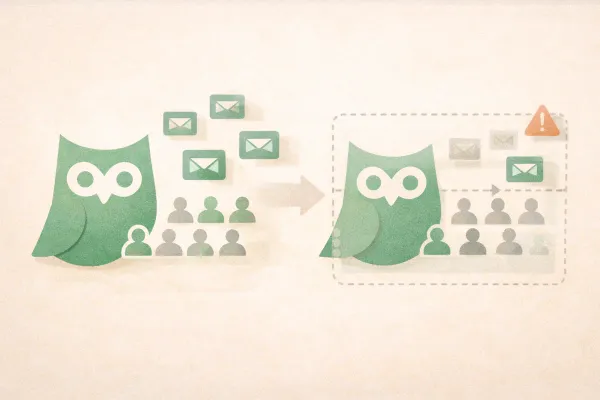
This is the big one. Since 2019, Mailchimp has counted all contacts toward your bill—including people who've unsubscribed but remain in your system. The rationale is that you could theoretically reach these contacts through postcards or social retargeting, even if they've opted out of email.
For nonprofits, this creates a frustrating dynamic. If 13% of your list unsubscribes over a year (which is typical at average unsubscribe rates), you're paying for people who can't receive your newsletters. The solution is to regularly archive unsubscribed contacts, but many organizations don't realize this until after they've paid for months of inflated counts.
Overage Fees Add Up Quickly
If your contact count exceeds your plan's limit during any billing cycle, Mailchimp charges for "add-on contact blocks." These aren't cheap. On the Essentials plan, exceeding your limit by 250 contacts can add roughly $6.50 to your bill. On Standard, the same overage costs more.
The platform doesn't interrupt your service when you exceed limits—which sounds helpful until you see the surprise charge on your next invoice.
Monthly Email Caps
Unlike some competitors that offer unlimited sends, Mailchimp caps your monthly emails based on your plan and contact count. On Essentials, you can send 10 times your contact limit per month. For a nonprofit with 2,500 contacts, that's 25,000 emails monthly. Exceed it, and you'll face additional charges.
For organizations that send weekly updates plus occasional event announcements, these limits usually aren't a problem. But if you're managing multiple ongoing communications streams, you'll need to monitor usage carefully.
Simple Email for Organizations
Send updates to your members without the marketing complexity.
Set up in 10 minutes. No credit card required.
Trusted since 1996 · Human support · Plans from $15/mo
How Mailchimp Compares to Alternatives
Mailchimp's 15% nonprofit discount is lower than what several competitors offer. Here's how the main options stack up:
| Tool | Nonprofit Discount | Starting Price | 2,500 Contacts (Monthly) | Counts Unsubscribes? |
|---|---|---|---|---|
| Groupmail | — | $15/mo | $15/mo | No |
| MailerLite | 30% | $10/mo | ~$17.50/mo | No |
| EmailOctopus | 20% (lifetime) | $9/mo | ~$18/mo | No |
| Mailchimp | 15% | $13/mo | $38–$51/mo | Yes |
| Constant Contact | Up to 30% | $12/mo | ~$50/mo | No |
The difference is meaningful. A nonprofit paying Mailchimp $51/month ($612/year) for Standard could get similar functionality from Groupmail at $15/mo with unlimited contacts ($180/year)—while also avoiding charges for inactive contacts.
For a full breakdown of every Mailchimp plan at each contact tier, see our Mailchimp pricing 2026 guide.
⚠️ Watch out: Mailchimp's contact counting policy means your bill can grow even when your engaged audience stays flat. Archive unsubscribed contacts regularly to avoid paying for people you can't reach.
What Nonprofits Actually Need
Most nonprofits sending member updates, donor communications, or event announcements don't need Mailchimp's advanced features. The marketing automation, predictive segmentation, and multi-variate testing that justify Mailchimp's higher tiers are built for businesses optimizing conversion funnels—not organizations keeping their community informed.
Here's what actually matters for typical nonprofit email:
A simple editor that doesn't require training. Your volunteer coordinator shouldn't need a tutorial to send a newsletter.
Reliable delivery so your messages reach inboxes. This depends more on your sending practices than fancy platform features.
Basic reporting to see who opened and clicked. Advanced analytics are rarely actionable for member communications.
List management that's straightforward. Import a CSV, organize by groups, done.
Human support when something goes wrong. Not chatbots, not forums—actual people who can help.
Better Alternatives for Nonprofit Email
If Mailchimp's pricing and complexity feel like overkill for your organization, several alternatives serve nonprofits better.
Groupmail
Built specifically for organizations rather than marketers, Groupmail offers Community-First pricing and doesn't charge for unsubscribed contacts. Groupmail manages email delivery on all plans—no technical setup, no DNS configuration, no third-party sending service to arrange. You sign up, import your contacts, and send. The Community plan at $15/mo includes unlimited contacts, keeping costs well under typical board-approval thresholds. Setup takes about 10 minutes, and you'll reach a human if you need support. EU-based and GDPR compliant by design.
Pricing last verified March 2026. Visit groupmail.io/pricing for current rates.
MailerLite
MailerLite offers a 30% nonprofit discount and a solid free plan for up to 500 contacts. The interface is clean and beginner-friendly. You'll only pay for active contacts, not unsubscribed ones. The downside: it's built for general small business use rather than specifically for organizations, so some features may feel unnecessary.
EmailOctopus
For nonprofits prioritizing budget above all else, EmailOctopus offers a 20% lifetime discount and one of the most generous free plans available (2,500 contacts, 10,000 emails monthly). The feature set is basic—this is email newsletters, not marketing automation—but for organizations that just need to send updates reliably, it works well.
Making the Right Choice for Your Organization
The best email tool for your nonprofit depends on your actual needs, not the longest feature list.
Choose Mailchimp if you genuinely need advanced automation, you're running sophisticated donor journeys with branching logic, and you have staff dedicated to email marketing strategy. The 15% discount is less competitive, but the platform's depth may justify the cost.
Choose Groupmail if you want simplicity, human support, and straightforward pricing. Community-First pricing starting at $15/mo, combined with no charges for inactive contacts and managed email delivery on all plans, makes it the better value for organizations focused on member updates.
Choose MailerLite if you want a balance of features and affordability with a clean interface. Good for nonprofits that may eventually grow into more complex email needs.
Choose EmailOctopus if budget is the top priority and you just need to send basic newsletters without bells and whistles.

Conclusion
Mailchimp's nonprofit pricing isn't as straightforward as the "15% off" headline suggests. Between paying for unsubscribed contacts, navigating monthly send limits, and watching costs climb as your list grows, many nonprofits end up spending more than expected for features they never use.
For organizations that simply need to send updates to their members—donor newsletters, event announcements, volunteer coordination—simpler tools often deliver better value. Community-First pricing starting at $15/mo with transparent, predictable pricing beats a 15% discount on a complex structure with hidden costs.
Ready to send your first update? Try Groupmail free—set up in 10 minutes, no credit card required. Built for organizations, not marketers.